Cover photo: Sophie Pinchetti / Amazon Frontlines
At Awana Digital, we work alongside Indigenous and frontline communities to strengthen territorial defense through community-led mapping and the co-design of CoMapeo. Through our work across the world, we’ve seen how Indigenous women are not only protecting some of the planet’s most biodiverse ecosystems — they are building long-term infrastructure for land governance and sovereignty.
When women are supported, connected, and offered capacity building, their leadership multiplies — strengthening individual territories, building regional networks, and scaling community-led defense across continents.
This International Women’s Day, we honor the women weaving ancestral knowledge and digital technology into powerful land defense strategies. Supporting Indigenous women leaders is not symbolic; it is essential to sustaining possible futures for our shared world.
From Kenya to Ecuador: Women-Led Mapping Protecting the World
From Kenya to Ecuador, women-led mapping is strengthening territorial defense worldwide.
Indigenous women often hold specific knowledge rooted in their territories through culturally informed roles. In many communities, women know where medicinal plants grow and when to harvest them; they safeguard sacred sites; they monitor rivers where water is collected; and they carry songs that mark seasonal cycles and ecological rhythms.
Because of this close relationship to land, women are often among those most directly impacted by environmental degradation and climate change. Their knowledge, experience, and perspective make community-led mapping processes more robust. When women lead or actively shape mapping strategies, land defense efforts become stronger, more holistic, and more sustainable.
We have witnessed this through our close collaboration with Indigenous partners — from the Amazon rainforest in Ecuador to the Ogiek highlands of Kenya.
Mapping as Legal Power: The Waorani Victory
In the heart of the Amazon rainforest, Nemonte Nenquimo became the first woman to lead the Waorani Nationality of Pastaza, Ecuador. In 2020, she received the Goldman Environmental Prize after leading the historic legal case through which the Waorani successfully reclaimed 200,000 hectares of forest that had been put up for sale to oil companies.
Central to this landmark victory were maps created by the Waorani community and used as legal evidence of their ancestral relationship to the territory. These maps challenged state narratives that portrayed the forest as empty land available for extraction.
As Nemonte writes in her memoir, "We Will Be Jaguars":
“The government maps of our forests were empty. What if we made our own map of our territory and filled it with our history, our stories, our knowledge? Then, when the government next tried to auction our lands to the oil companies, we could show them that our forest was not a big empty space, make them see that it was so full and flourishing with life that there was no room for oil wells and pipelines.”
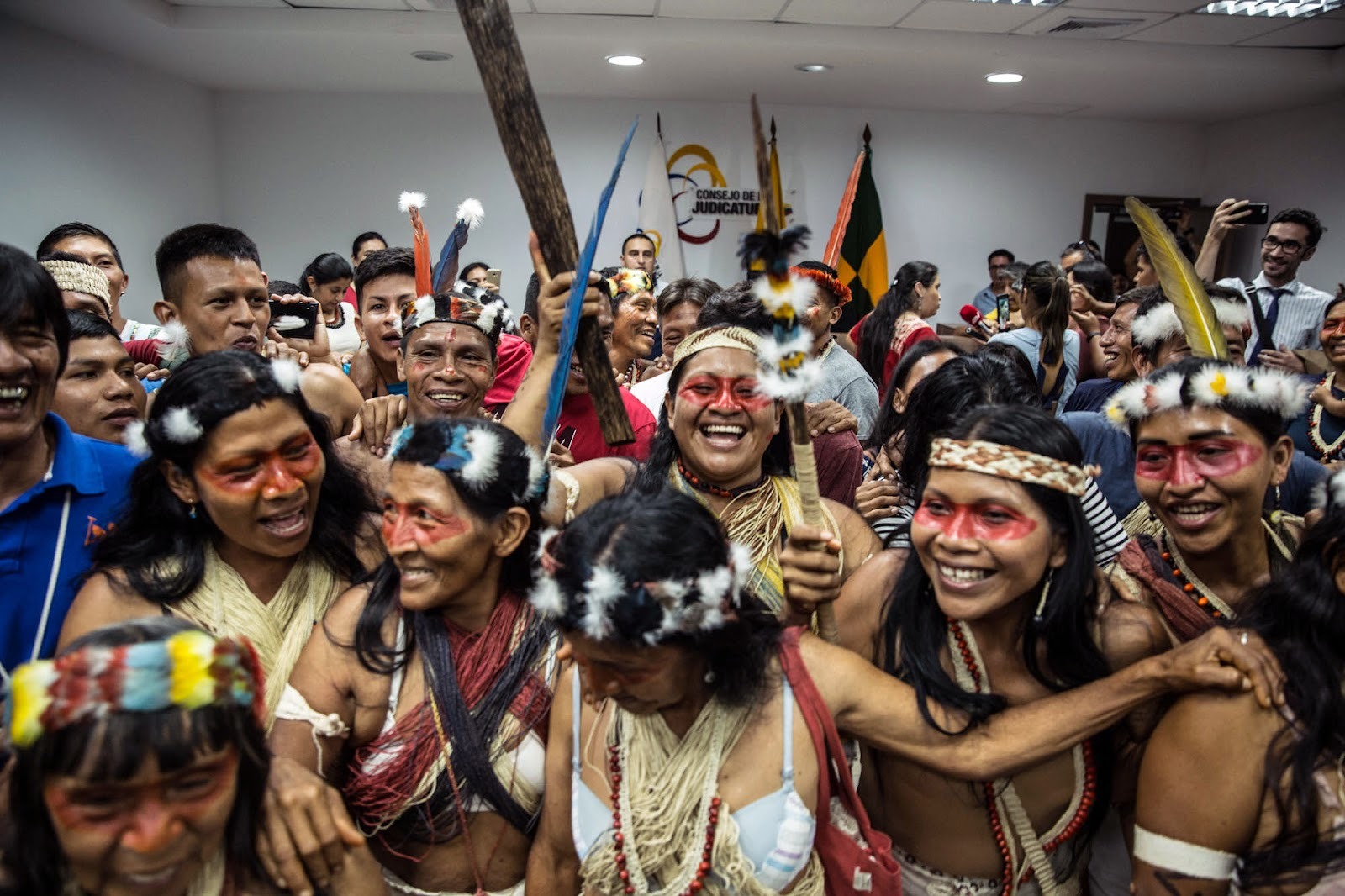
In close partnership with Waorani leaders, Alianza Ceibo, and Amazon Frontlines, Awana Digital played a key role in designing and supporting the participatory mapping process, which enabled women, elders, and youth to document sacred sites, hunting areas, and living territories using Mapeo. Through this collaboration, the community generated georeferenced evidence grounded in their own knowledge systems — evidence that proved decisive in court.
The case set a powerful legal precedent in Ecuador and has since inspired Indigenous communities worldwide. It demonstrated that when Indigenous women are central within mapping efforts, they are not only documenting territory — they are reshaping legal narratives, strengthening sovereignty, and redefining how land is valued and defended.
Ogiek Women Advancing Land Rights Through Mapping
The Ogiek of Mt. Elgon in Kenya have lived in relationship with their forest for generations, sustaining both their communities and one of the last refuges for forest-dwelling elephants in East Africa. Strong community by-laws guide their stewardship, reinforcing a deep, reciprocal relationship with the land.
Led by our partners at the Chepkitale Indigenous Peoples’ Development Project (CIPDP), the Ogiek have been mapping their territory for over a decade, engaging more than 350 community members. Since 2020, in collaboration with CIPDP and their longtime partners at Forest Peoples Programme (FPP), we have supported a women-led mapping team that has played a central role in advancing this work.
Over three years, the team used Mapeo to collect more than 5,000 data points, documenting culturally significant places using Ogiek toponyms. The areas women mapped identified critical resources such as bamboo forests, herbal medicine areas, and traditional harvesting zones — knowledge deeply rooted in women’s expertise and lived experience.
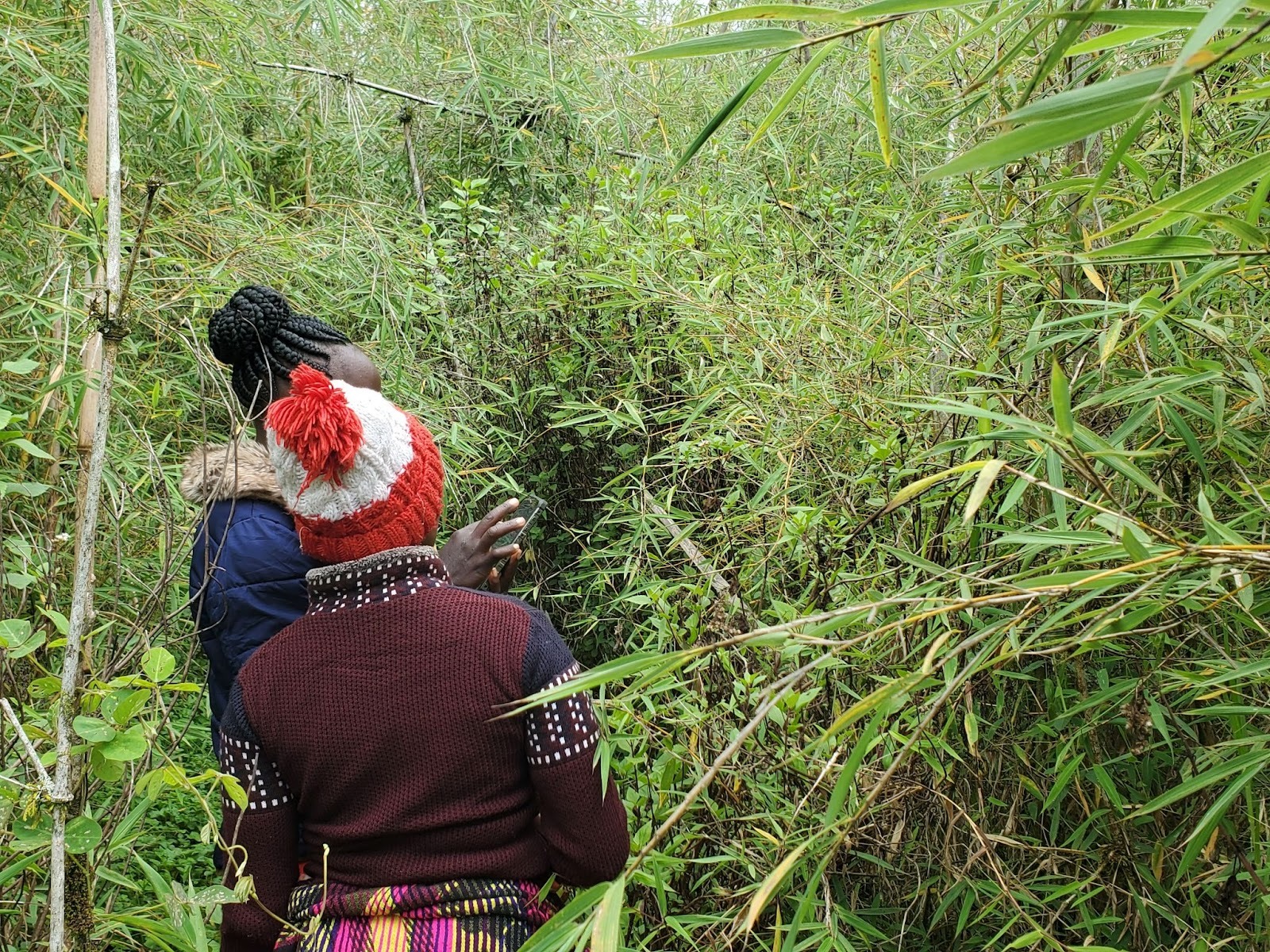
The maps they produced have already led to tangible victories. Following a successful court case in September 2022, portions of their land were returned, with additional land claims currently under review. The mapping evidence has strengthened their legal advocacy and reinforced their stewardship practices.
“Women helped develop priority resources to be mapped, like those centered in women such as firewood, bamboo and herbal medicines,” explains Phoebe Ndiema, Gender Justice and Mapping Officer, CIPDP.
“Women led the mapping: the young women mapped, went to the field, collected the data and validated it with women Elders. Their contribution brought a major success for this project. More than forty women are now empowered and have the capacity to map. They played a vital role in the success of this project.”
Today, Ogiek women continue to participate as biodiversity monitors and local experts, documenting the areas where they harvest bamboo shoots, nettles, and forest vegetables in coexistence with elephants. Their leadership strengthens both conservation outcomes and land rights advocacy — demonstrating how women-led mapping builds durable, community-driven territorial defense.
Scaling Territorial Defense Through Women’s Leadership
As Nemonte affirms, stories are living beings. The leadership of Waorani and Ogiek women has not remained confined to their territories — it has traveled, inspired, and multiplied.
In 2023, we convened the Earth Defenders Gathering in Tena, Ecuador, bringing together 40 participants from eleven countries to exchange strategies and strengthen alliances. Among them were women from the Waorani, Wayana, Guajajara, Secwepemc, and Māori peoples, sharing experiences defending their territories from oil extraction, land invasions, illegal logging, and poaching.
From that gathering, relationships deepened and collaboration expanded. In 2025, we co-organized the Women’s Gathering in Brazil alongside Guerreiras da Floresta, hosted in the Indigenous Territory of Caru in the Brazilian Amazon. More than 90 women from territories including Arariboia, Krikati, and Pindaré gathered to exchange strategies for land defense while celebrating collective strength and joy.
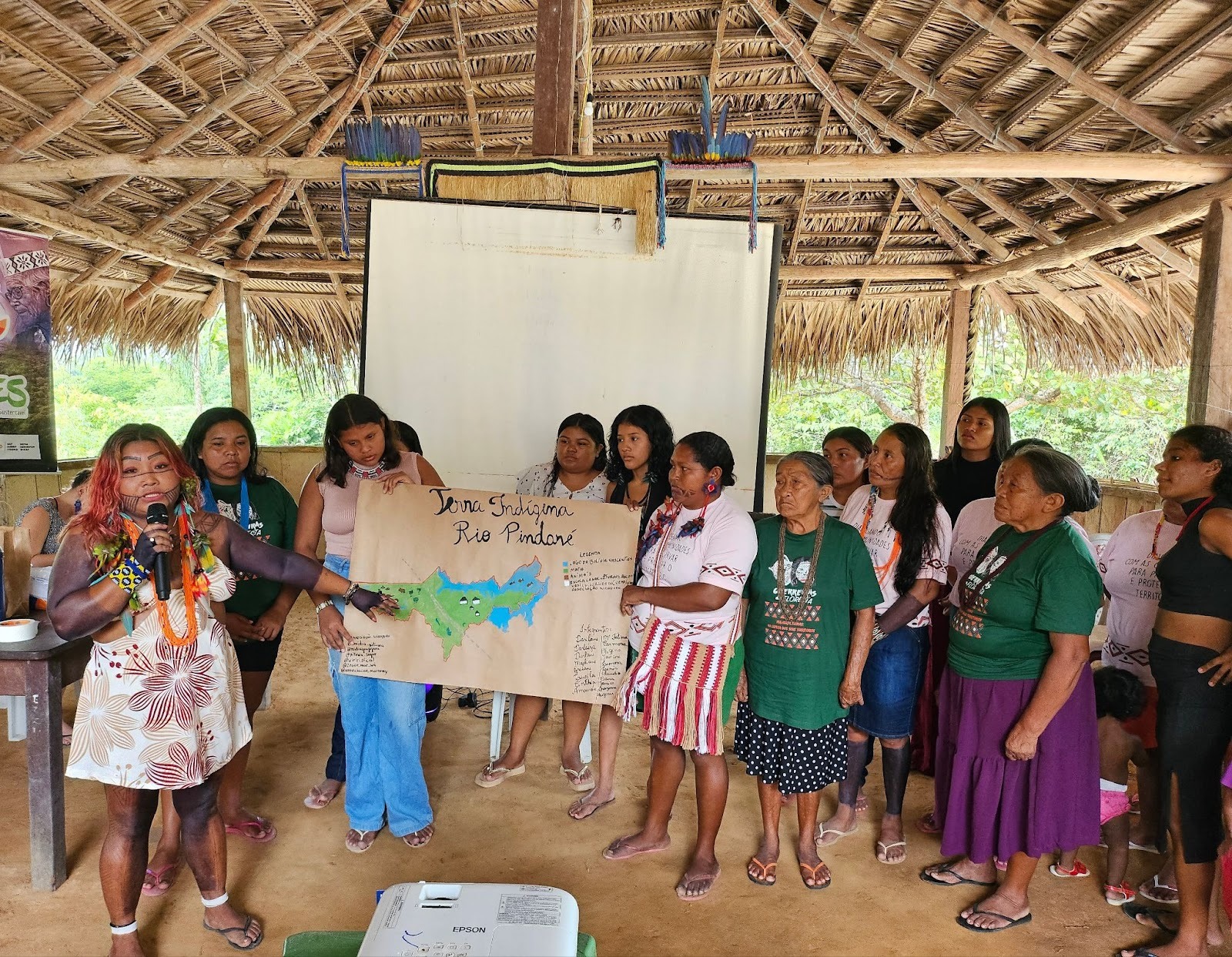
As Bárbara González Segovia, who led Awana Digital’s work in co-organizing the gathering, reflected:
“The lessons learned were about the immense power of collective action and building knowledge among Indigenous women. When they come together, they shake the very ground, powerfully showing how these rights are won through solidarity… Their deep connection to the land means that the rights of Indigenous women are profoundly interconnected with the rights of nature itself. To harm one is to harm the other.”
This multiplier effect extends beyond Latin America. In 2023, CIPDP organized the Daughters for Earth Gathering in Mt. Elgon, Kenya, bringing together 50 participants from across Central and East Africa. Ogiek women shared mapping methodologies and territorial defense strategies with other Indigenous leaders.
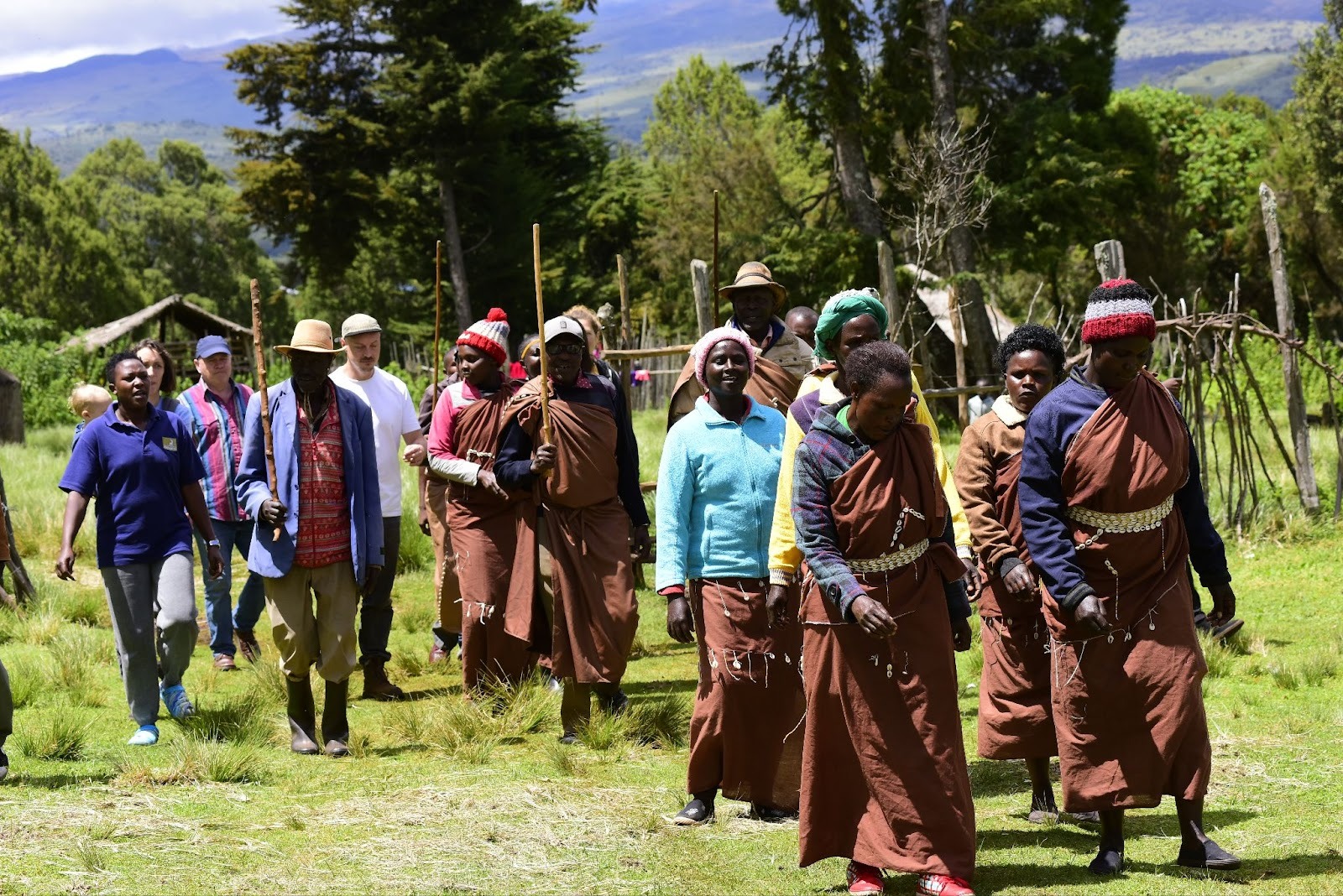
Among them was the Maasai organization FINAL Governance from Ngorongoro, Tanzania. Inspired by the Ogiek process and facing imminent eviction threats, they requested support to initiate their own community-led mapping. Within three months, Ogiek women mappers, alongside our team and FPP, trained 25 Maasai community members in mapping strategies using Mapeo.
The Maasai-led mapping has since resulted in maps presented to Presidential Land Commissions and documentation of human rights violations submitted to the UN Committee on the Elimination of Racial Discrimination (CERD).
Women’s leadership does not simply strengthen individual territories — it builds regional networks, accelerates knowledge exchange, and scales community-led territorial defense across continents.
Co-Designing Technology for Sovereignty
For generations, maps and digital technologies have often been designed without Indigenous communities — and especially without Indigenous women — in mind. Too often, mapping tools have extracted information rather than strengthened self-determination.
At Awana Digital, our approach is different. CoMapeo has been built through long-term collaboration with Indigenous partners, and Indigenous women have played a vital role in shaping how the tool evolves. Their insights influence how data is collected, categorized, safeguarded, and shared — ensuring that the technology reflects community priorities rather than external agendas.
When data represents ancestral knowledge rooted in territory — sacred sites, medicinal plants, seasonal cycles, land use patterns — it is not merely information. It is sovereignty. It is governance. It is self-determination.
This understanding guides the ongoing development of our tools, which have been used in more than 90 countries across six continents, supporting communities who have collectively mapped and monitored over 17 million hectares of land since 2015. Each data point is not only geographic — it is cultural, ecological, and political.
By centering Indigenous women in co-design processes, we strengthen both the technology itself and the territorial defense strategies it supports. Thanks to their input, CoMapeo is more than a digital tool: it is the infrastructure for community-led protection of land, life, and culture.
Sustaining Women-Led Territorial Defense
The leadership highlighted here did not emerge overnight — it is the result of sustained commitment, trust, and collaboration across territories and generations.
At Awana Digital, we remain committed to walking alongside Indigenous women leaders as CoMapeo continues to evolve in response to their priorities, governance practices, and visions for the future.
This International Women’s Day, we invite you to help expand women-led mapping and territorial defense in 2026 — and continue amplifying these living stories toward possible futures. Make a contribution through our website or contact us to support our work with women land defenders. Your investment strengthens the networks, strategies, and community-driven systems protecting land, culture, and biodiversity for generations to come.