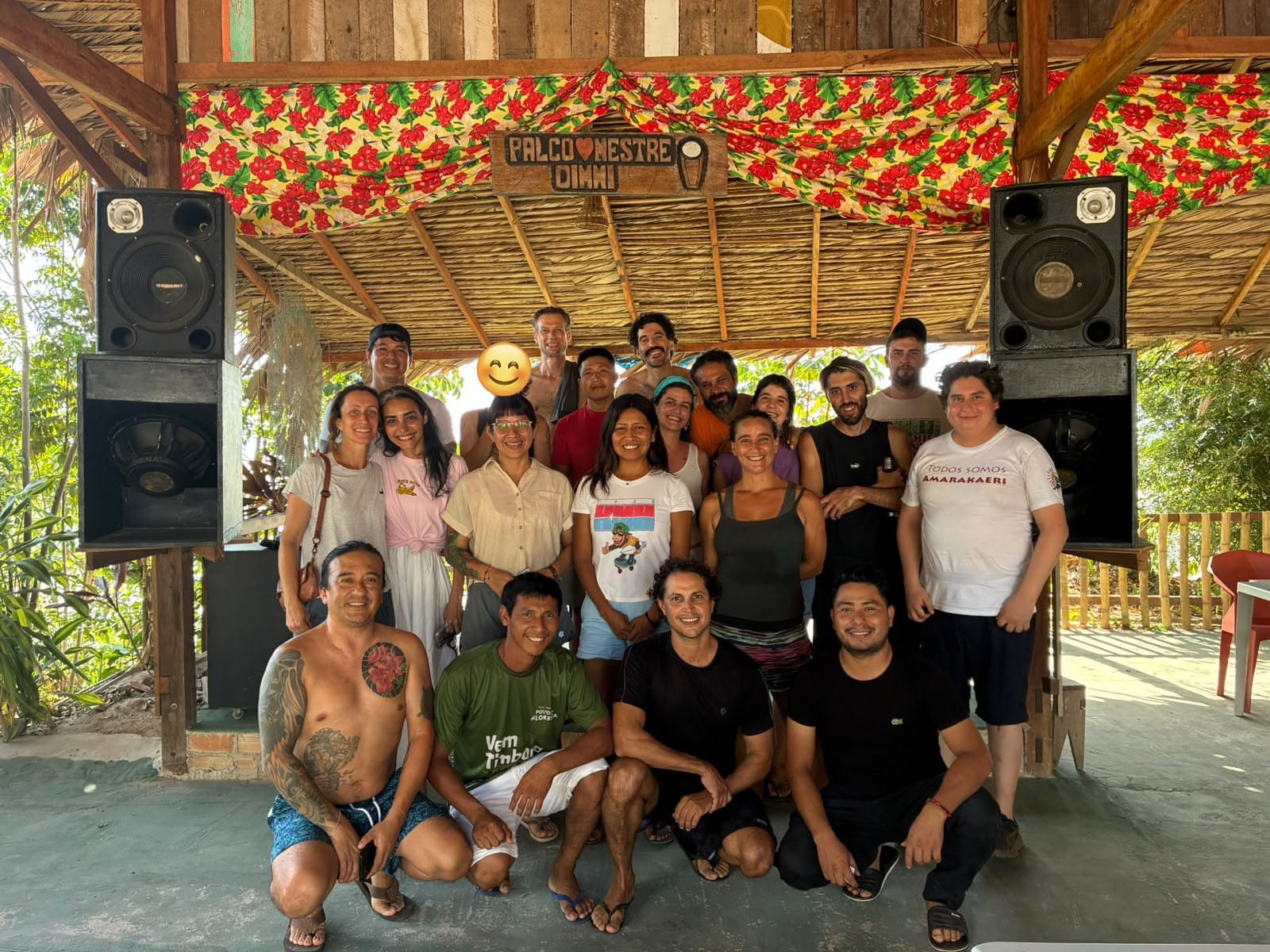
In Belém, Brazil, allies and trainers working alongside Indigenous Earth Defenders gathered across countries to exchange knowledge, strengthen relationships, and learn from one another.
Across cultures and territories, stories take their own special moments and spaces. It is often around the fire, or a feast, or in the process of preparing something nourishing and tasty, that the learnings within those stories land in collective hands.
In that spirit, in August we convened a gathering in Belém, Brazil, inviting allies and trainers of Indigenous Earth Defenders in Latin America to come together for three days and exchange the knowledge and learnings that come from our diverse experiences. We gathered as a strategy to strengthen the work we share through a woven network of relationships.
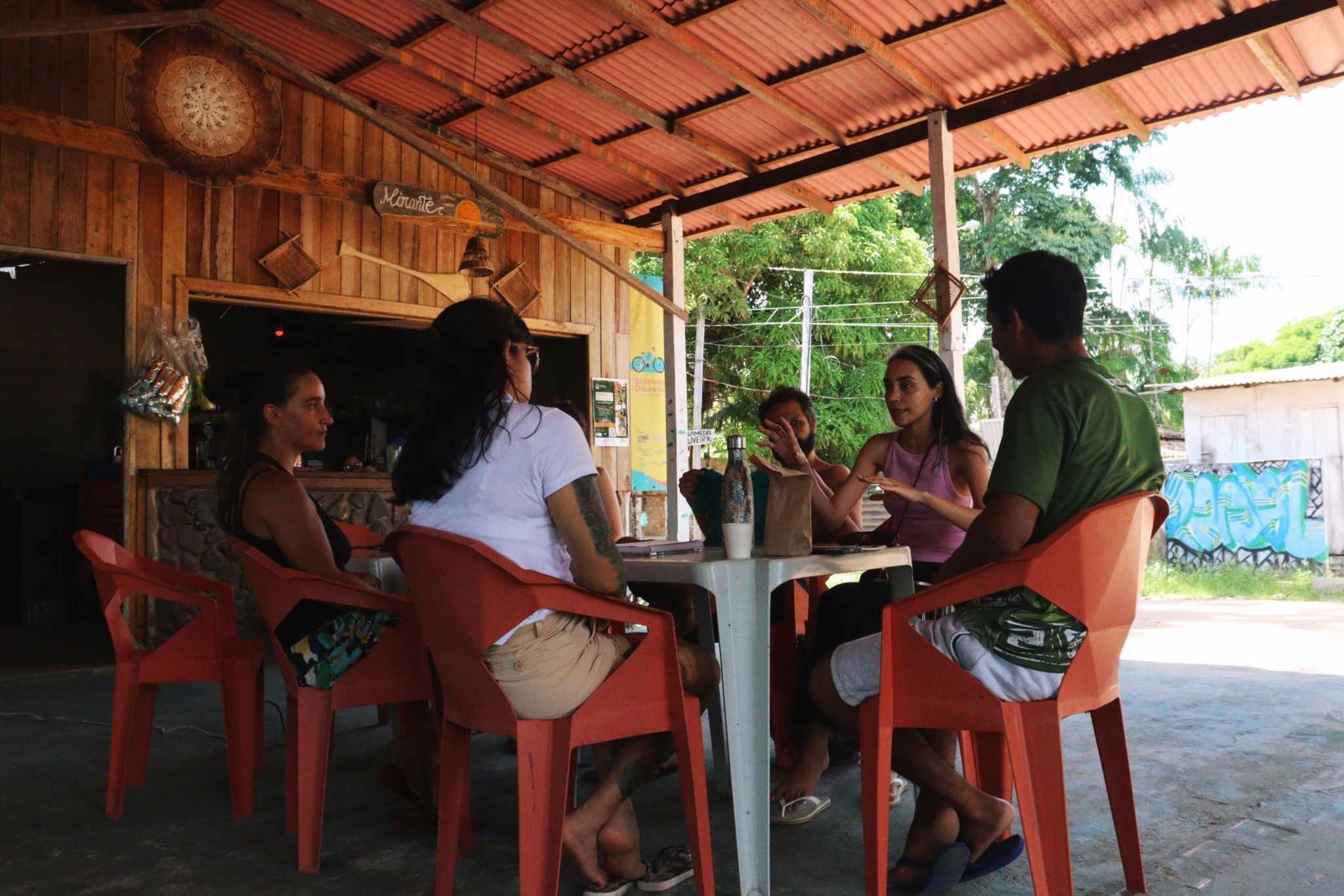
That is how team members from Instituto Iepé, Univaja, Amazon Frontlines, Federación de Comunidades Activas de Ucayali (FECONAU), E-Tech Perú, and our Deep Accompaniment team at Awana Digital spent time together on the beautiful Ilha de Cotijuba, surrounded by the Pará river, which often felt like the ocean. The Templo de Umbanda Caboclo Rompe Mato hosted the gathering and welcomed us with the warmth that felt like fresh soil for our conversations to flourish.
We came together with diverse experiences and approaches, but one shared understanding: strong territorial defense does not come from technology, but grows through relationships and networks of people who can learn from one another. We decided to trust the process of an unconference, with the support of Coolab Brazil as facilitators. It would feel wrong to pretend there is a single definition of what that is, so perhaps it's best to describe what it looked like for us:
Prior to the gathering, Awana Digital‘s team asked each invited organization what they wanted to learn and what they wanted to share. When we finally met in person, right after a shared breakfast with coffee and tapioca, we introduced ourselves and looked together at all the themes we had brought in response to those two questions.
Then we went through the messy and long - but nourishing - collective decision-making process and came up with an agenda and format that felt right for the group sharing that time and space.
Our unconference started with stories from the field, shared in small groups that brought together participants from Ecuador, Peru, Colombia and Brazil in portuñol conversations that soon felt like a shared language. As Romario Chacón from Federación de Comunidades Activas de Ucayali (FECONAU) reflected on the gathering, “Everyone was comfortable because everyone was just as they wanted to be, and that’s a great lesson I’m taking away, which I’ve already been sharing, that when you’re comfortable, you learn better and don’t feel discriminated against.”
After opening that window into our teams, contexts and realities in which we work, we dove into more specific themes: training methodologies, monitoring and mapping processes, data management, and advocacy.
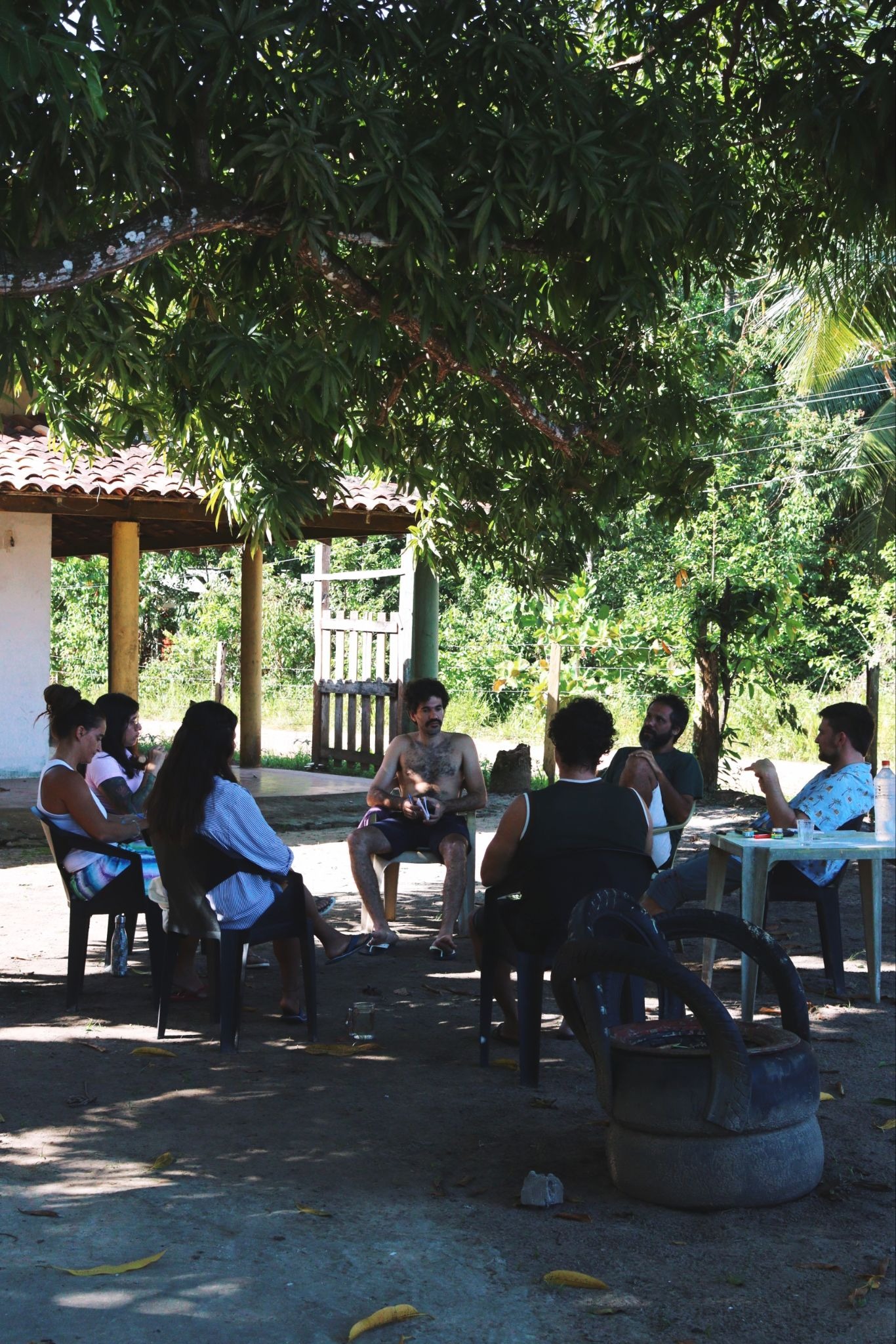
We talked about shared challenges and strategies, including dynamics and tensions related to carbon credits schemes and colonial logics of fortress conservation. We also talked about strategies that may look different across territories but respond to a similar love and care for the land.
“This gathering helps us see many realities in other countries, and communities that have been fighting against various illegal and legal activities affecting their territory. I met all those people who are swimming against the current; got to know about diverse territories across the world and the struggles they are facing. That’s where something new is born; something beautiful, something that always gives us the strength to keep resisting,” Romario shared.
After diverse rounds of deep, nourishing conversations in groups, we highlighted specific interests that had emerged through these sharings and created space for participants to share their knowledge: from satellite imaginary, to tools like Guardian Connector and CoMapeo, which are co-designed by Awana Digital and CMI teams, both present at the gathering.
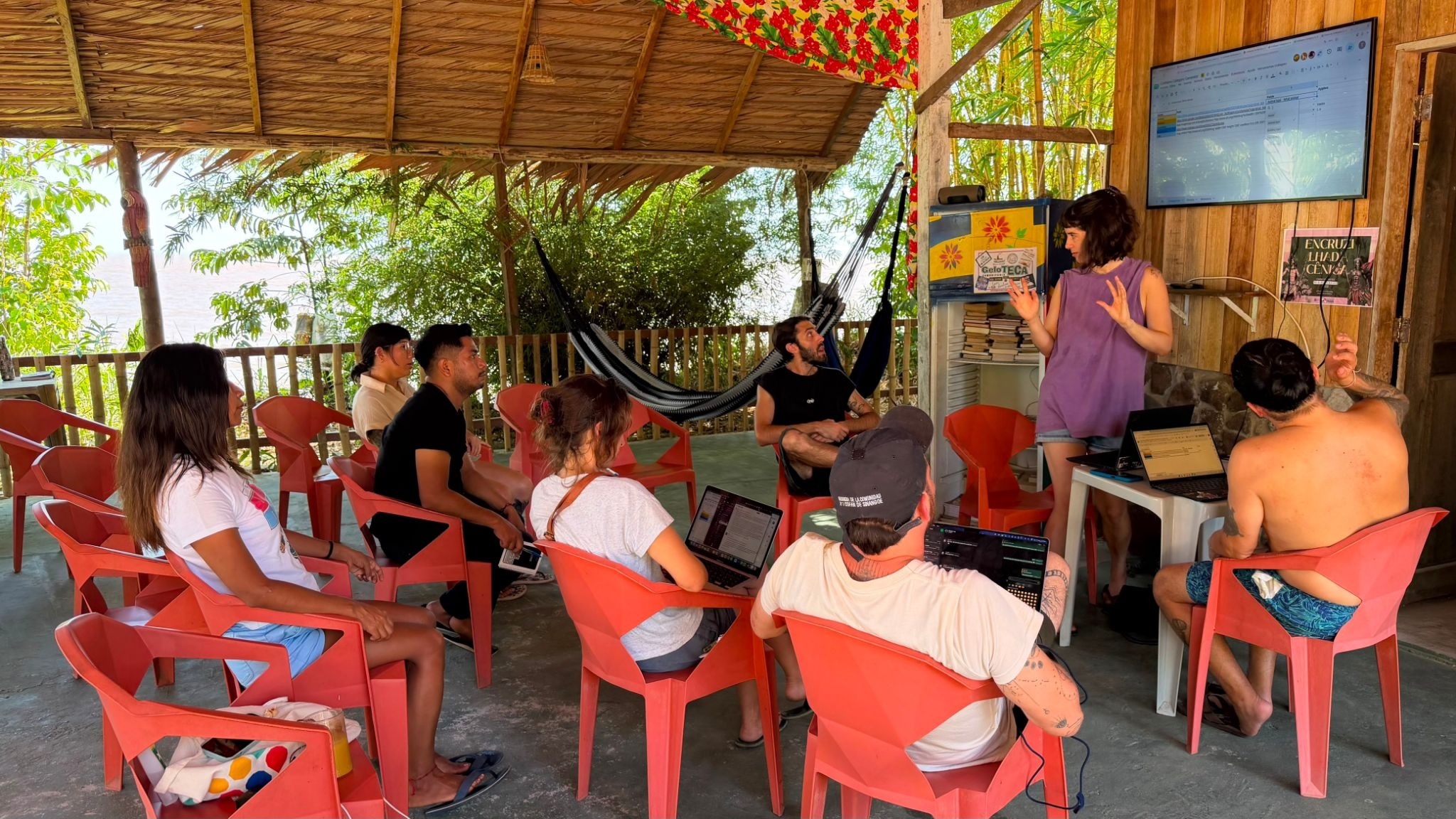
Even these last conversations, which may sound technical, were not merely about the tools. They always ground us back in the processes we support, the communities we learn with, and the different shapes those processes take when they are led by the communities doing territorial defense. These experiences ultimately inform the technology co-design and organizational roadmaps of our respective organizations.
“For me, the gathering in Belém was very meaningful because it created a space for exchange, listening, and connection among people with different experiences and perspectives. More than the discussions themselves, I was particularly struck by the opportunity to be together, have conversations, and learn from one another. One of the highlights for me was seeing how different experiences can come together to generate new ideas and possibilities. I left the gathering with the feeling that these spaces for dialogue are essential, and that often, the connections we make are just as important as the content we discuss,” shared Mayana Pontes, Conservation Metrics International.
We gathered for three days to share and learn from approaches, methods, risks, learnings, wins and challenges. We let it be portuñol. We shared music and food, and reaffirmed that territorial defense does not come from technology, but grows through relationships - and that coming together is itself a powerful collective strategy.